

Lower demand. Simpler pumping.
For small businesses, golf courses, contractors and vehicle fleets with lower daily fueling demand.
LIGHT-DUTY FLEET / LOWER-VOLUME FUELING
A complete fuel storage and dispensing package with an external transfer pump, metering, hose and nozzle. Start with how your vehicles fuel, then choose the storage volume.
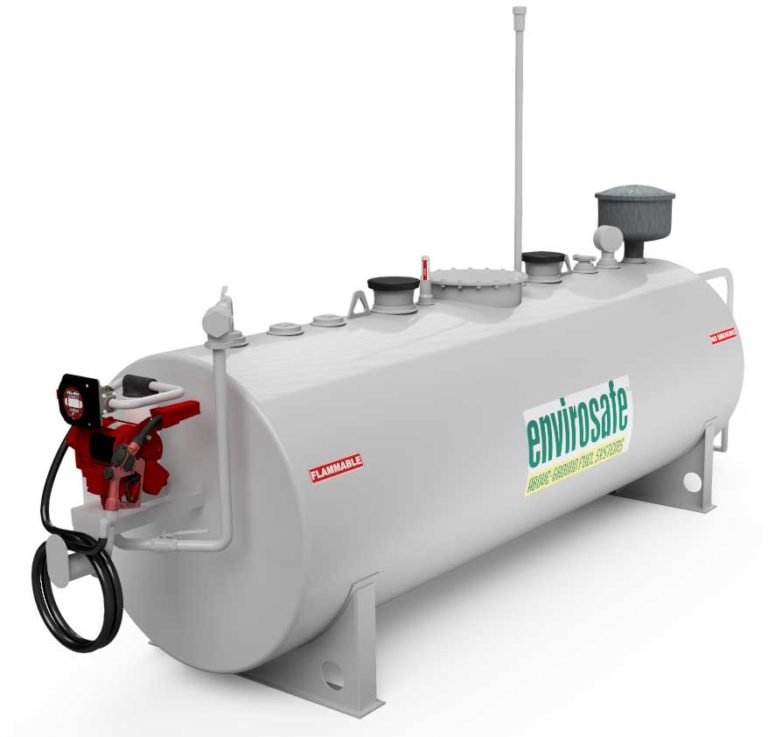
Choose the equipment approach before choosing the tank size.
For small businesses, golf courses, contractors and vehicle fleets with lower daily fueling demand.
Daily gallons alone do not determine pump suitability. Duty cycle, peak demand and required flow still matter.
Compare E-Cube for a compact package, or F-Fleet and C-Fleet when pumping demand or protection needs increase.
The right package makes responsibilities clear before equipment is ordered.
| What are you buying? | Bare tank | Contractor-ready | Turnkey fleet system |
|---|---|---|---|
| Storage tank | Included in specified scope | Included in specified scope | Included in specified scope |
| Pumps, piping & controls | Specified separately | Factory scope agreed by project | Coordinated as a system |
| Dispensing equipment | Specified separately | Factory or field scope agreed | Matched to the fleet |
| Site work & startup | Assign to the project team | Coordinate the contractor handoff | Confirm in the project scope |
Nominal tank volume is not the operating fuel volume. Keep the 90% target and 95% fill ceiling in view as you compare.
Plan at 90% operating capacity. On equipped systems the alarm sounds at 90% and automatic overfill prevention stops incoming fuel at 95%. Confirm the supplied devices and settings.
Light-duty fleet
450 gal at 90% operating / alarm
475 gal at 95% maximum / shutoff
Light-duty fleet
900 gal at 90% operating / alarm
950 gal at 95% maximum / shutoff
Light-duty fleet
1,800 gal at 90% operating / alarm
1,900 gal at 95% maximum / shutoff
Light-duty fleet
2,700 gal at 90% operating / alarm
2,850 gal at 95% maximum / shutoff
Light-duty fleet
3,600 gal at 90% operating / alarm
3,800 gal at 95% maximum / shutoff
These light-duty sizes are configured through the existing inquiry path. For individual compact product pages, explore the 500-, 1,000- and 2,000-gallon E-Cube packages.
Compare E-Cube packagesUse the questions your sales engineer will need to resolve. The result gives you a starting point and the next checks.
Continue to your quote when you are ready. Matching answers fill the form; other details carry into Additional Quote Notes.
YOUR STARTING POINT
Answer the questions to see what supports this choice and what needs confirming.
Your quote and approved drawing define the equipment, connections and responsibilities.
Start with fuel use and delivery timing; account for fuel turnover and peak periods.
Match external-pump duty cycle, flow and fuel compatibility to your routine.
Confirm metering, filtration, hose reach, nozzle, power and site preparation.
Coordinate access, unloading, foundation, power and commissioning with the supplied system.
Confirm the fuel, equipment list, connection locations and project drawing.
Assign site preparation, electrical work, unloading and delivery access.
Complete the specified connections, checks and operator handover.
BEFORE THE SYSTEM ARRIVES
Use these guides alongside the dimensions and electrical references on the individual product pages.
Understand UL 2085, UL 142, fuel use and the effect of nearby buildings.
Read the guide →02Match external-pump power and duty cycle to the vehicles and daily routine. Include vehicle protection and delivery access.
Read the guide →03Use the selected equipment’s voltage, phase and load schedule before sizing circuits.
Read the guide →04Identify the fire, planning, building and environmental offices for the address.
Read the guide →YOUR NEXT STEP
Bring your fuel use, site information and equipment priorities. We’ll help resolve the rest.